
On July 25th, Film at the Folk Hall hosted the first edition of York on Film, an evening celebrating York and the filmmakers who call it home.

It was a great evening, showcasing 12 submitted titles, as well as a special spotlight of the archival documentary, Women of York. A co-production between York St John and York Film Archive, showcasing the roles women played throughout history, in relation to the city. It can now be watched on youtube here (and we highly recommend everyone to check it out).
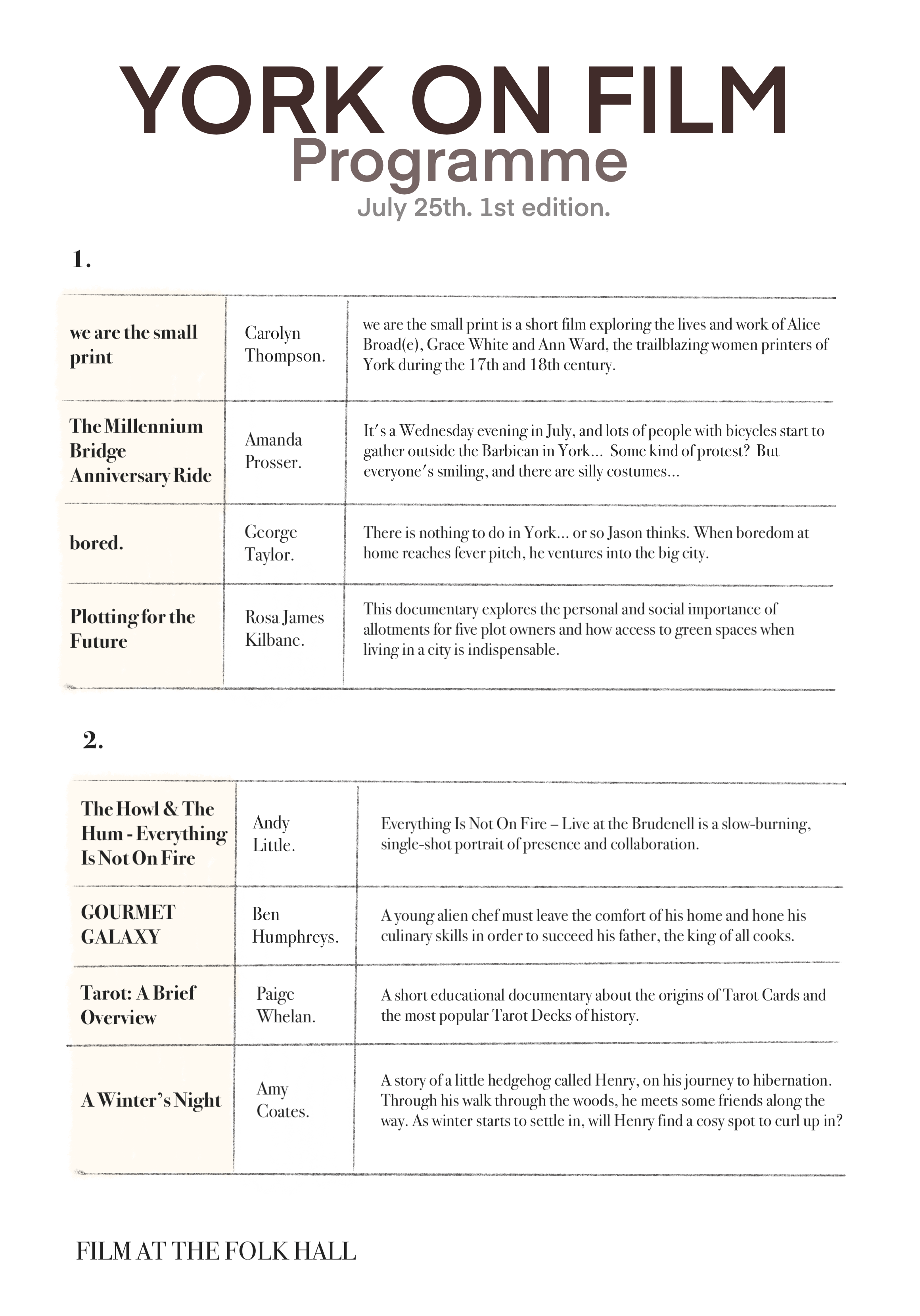
Throughout the night, the films covered a myriad of themes and genres. Documentaries took the majority spotlight of the night, covering topics including, the secret female history of the printing press in York (we are the small print), a mutli-perspective bike rally through the city (The Millennium Bridge Anniversary Ride) and the joys of community allotmenting (Plotting for the Future).
Even more so, there was some phenomenal work across three wonderful animations, all showcasing a different approach and reminding us that animation is not a genre, but a medium to tell a story or represent an emotion. Last but not least, the narrative shorts we screened displayed the range of stories the city backdrops every day.
Below you can see the full program from the night.

The shorts were followed by QA’s with 7 filmmakers from the night, providing a further insight into their wonderful work and receiving interesting comments and observations from the audience. One of the filmmakers who inspired the Q&A portion of the night, was Lost But Found filmmaker, Winifred Iguwa, whose delightful short captured a unique perspective of a migrant experience in York.
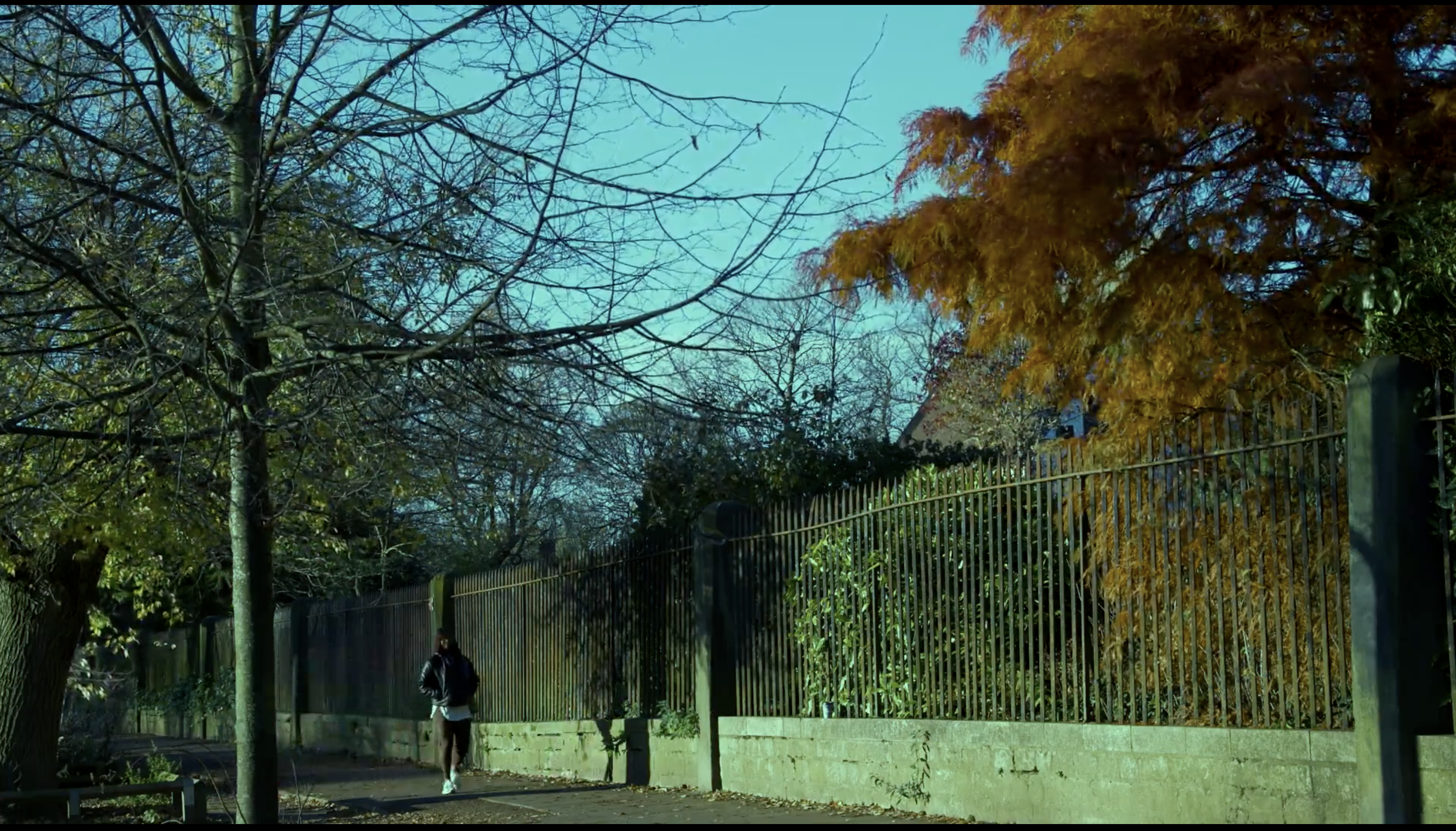
For a long time, seeing a film that was set in the North of England felt like an accomplishment in itself. Hearing actors with northern accents, dealing with everyday struggles was a unique experience in the landscape of British media, however, Winifred’s film reverts expectations with its approach to the familiar and unfamiliar accents that are found on the streets of York. In a society in which the Yorkshire accent is deemed an approachable voice, a representation of overt welcomeness, the opening of Lost But Found stood out, as the dialogue plays on the dichotomy of how language can affect non native speakers.
Further, the filmmaking language of Lost But Found transforms the small city into an overbearing landscape that drowns out the protagonist as they wander around the streets feeling lost.
After some further discussion, we asked Winifred a handful of questions about her experience as a filmmaker in York. You can see the conversation below:
How did the city influence your approach to Lost But Found?
I was heavily influenced by the picturesque city of York. I remember the first time I arrived in York, early September, rushing for school registration, I couldn’t take the time to take in the city’s beauty because I felt flustered, then later while standing on the bridge over the River Ouse, I was stunned by the beauty. The city walls, the historic buildings, the riverside, even the sunsets at the museum gardens, all gave me a deep sense of warmth. This shaped the Lost but Found’s pacing and tone. I wanted York to do two things in the film: first, to feel overpowering, when the protagonist felt lost, and I achieved this with its grand historic architecture; and second, to feel welcoming and reflective, which I captured through quiet shots by the river and the golden light of sunset at the gardens.
Did you make films before living in York? If so, has it changed how you approach storytelling?
Yes, I made films in Nigeria before moving to York, mostly dramas. York has slowed my process in a good way. I’ve become more intentional, more searching with my storytelling. It feels like I’ve gone through a process of re-knowing myself, and I now have the opportunity to relay that growth through my films.
Did your experience influence the story of Lost But Found?
Absolutely. The film is rooted in feelings of displacement and discovery, which I personally experienced while adapting to York. On my first day into the city, I missed my bus, walked around aimlessly, and finally arrived where I was going feeling flustered and discouraged. However, when I decided to pause, I began to appreciate the beauty of the city, small acts of kindness from people I met like someone lending me a book, another person showing me around, felt like warm hugs. That mix of discouragement and unexpected welcome inspired the heart of Lost But Found.
How did you approach language and accent in the film?
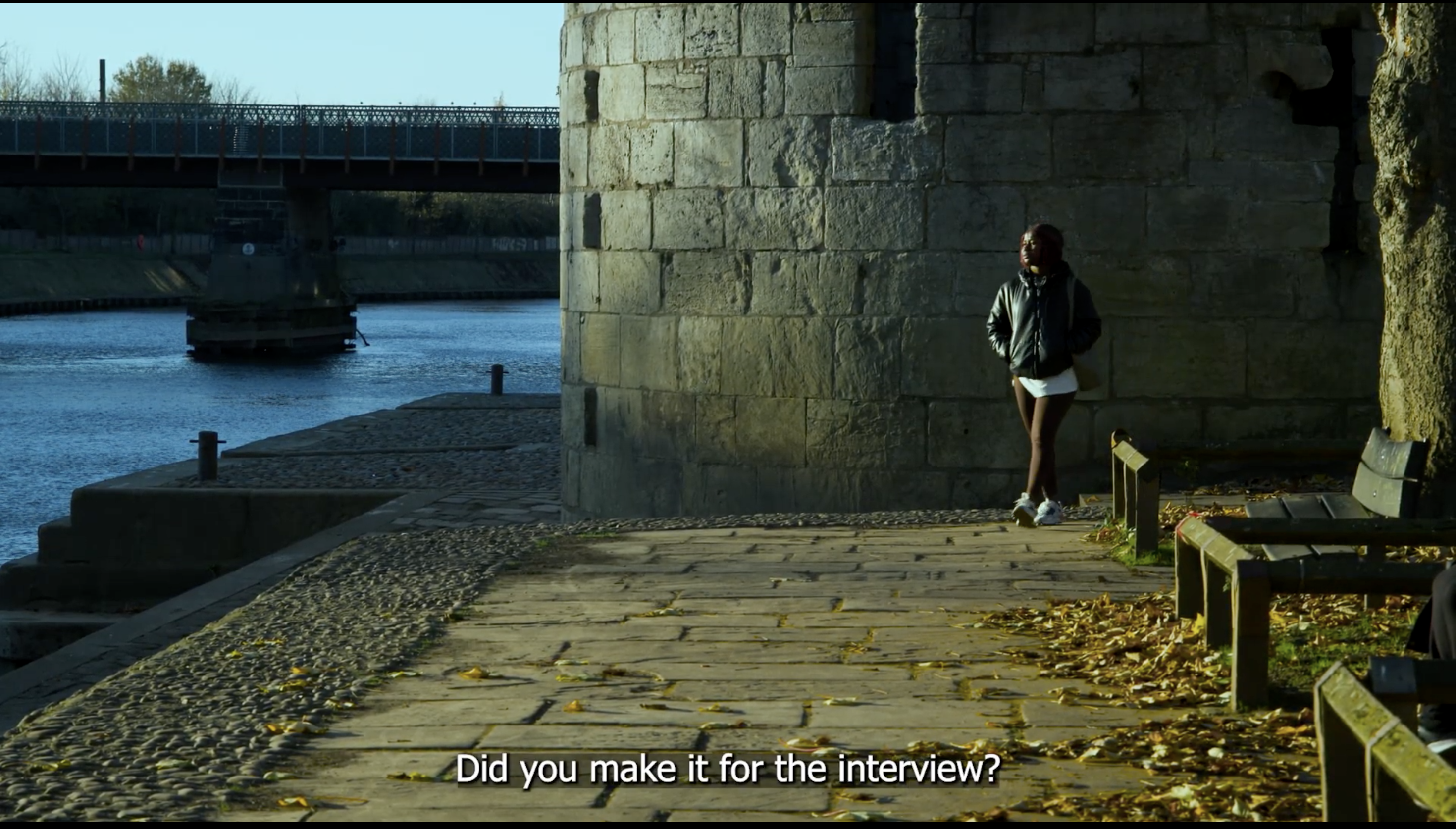
I was deliberate about keeping the authenticity of each character’s voice. In the phone call scene between the interviewer and the protagonist, the contrast of accents reflects both distance and connection. Though they’re both speaking English, the northern accent makes it harder for the protagonist to understand, and vice versa, adding pressure and miscommunication. Yet, with her sister, her own accent and native language bring comfort and familiarity. For me, these details add realism to the experience of being a foreigner adapting to a new environment.
How will you continue working as a filmmaker in York?
I plan to keep developing narratives here while tying York’s stories to broader themes. I love being part of creative communities and want to keep showcasing the richness this city has to offer. It’s an ideal place to make work with universal appeal. For example, in my current project IDIA, I filmed at the York Africa Day event here in York, and there was so much cultural richness captured. York has so much to give that a thousand films wouldn’t be enough to cover it.
Did you find a limitation or conflict in collaboration, telling a specific narrative in York?
The main challenge is resources and platforms. York has talent, but less infrastructure than bigger cities. That limitation, though, has encouraged me to find unconventional solutions and lean on collaboration. In terms of narratives, I don’t feel limited, the bigger gap is in platforms and opportunities to showcase and promote the films being made here.
Do you think your perspective impacts the films you want to tell/capture?
Definitely. My perspective as a Black woman who has moved between cultures shapes how I tell stories. I gravitate toward narratives about identity, belonging, and cultural memory. I want my films to feel personal yet universal, allowing anybody across the world to see a reflection of themselves. Film is so powerful and universal in the way, if you present an experience in a certain way, everyone in one way or another, across tribes and genders can relate to it. That’s what I aim for, for the audience to give my films their own meaning, and feel seen.
Do you think you have a central theme across your work?
Yes, identity and belonging are recurring themes in my work. Whether through personal struggle, cultural connection, or internal transformation, I often return to stories about finding oneself in the face of doubt or pressure. At the core, my films are about what it means to be human.
 Film at the Folk Hall